

 June 11, 2026
  3 mins to read
 Many job candidates believe that answering interview questions well is enough to secure the job. They focus on giving the “right answers” and forget one crucial part of the interview process asking questions.
What most candidates don’t realize is this:
not asking questions can silently cost you the job.
Why interviewers expect you to ask questions
An interview is not a one-way evaluation. It’s a professional conversation where both the employer and the candidate assess fit.
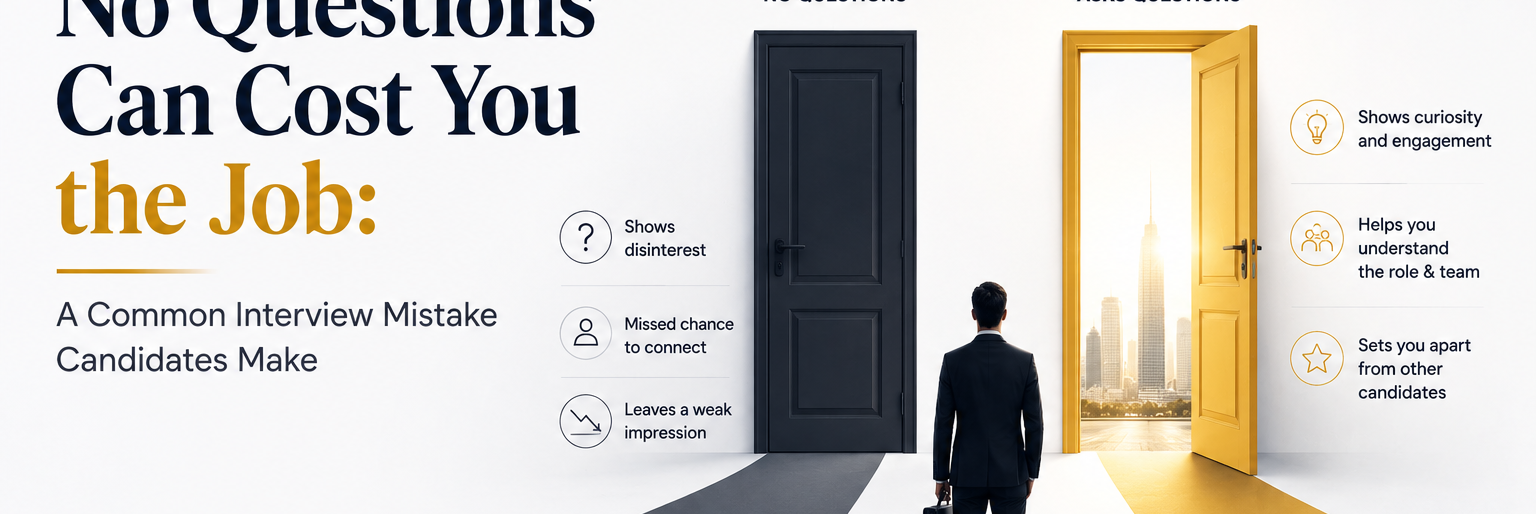
When candidates don’t ask questions, interviewers often assume they are:
- Uninterested in the role
- Unprepared about the organization
- Passive rather than proactive
In Nepal’s competitive job market, where many candidates have similar qualifications, this small mistake can make a big difference.
Did You Know? Interviewers use your questions to judge you
The questions you ask reveal:
- How seriously you’ve prepared
- Whether you understand the role
- Your long-term career mindset
- Your confidence and communication skills
Candidates who ask thoughtful questions often appear more engaged, motivated, and mature.
Why smart questions matter more than smart answers
Anyone can memorize interview answers—but asking the right questions shows genuine curiosity.
Smart questions help interviewers see that you:
- Care about growth and learning
- Want to contribute meaningfully
- Are thinking beyond salary and title
- See yourself as part of the organization
This is especially important in people-focused workplaces common in Nepal.
Examples of smart questions candidates should ask
Here are a few questions that leave a positive impression:
About Growth
- “What learning or growth opportunities are available in this role?”
About Team Culture
- “How would you describe the team culture here?”
About Performance Expectations
- “What does success look like in the first six months?”
About Development
- “How does the organization support skill development?”
These questions show seriousness, ambition, and self-awareness.
Questions candidates should avoid
Some questions can hurt your chances if asked too early:
- Only asking about salary and leave
- Asking things clearly mentioned on the website
- Asking no questions at all
Timing and relevance matter.
Why this matters in the Nepal job market
With increasing competition, employers in Nepal look for candidates who:
- Take initiative
- Communicate confidently
- Show emotional intelligence
- Demonstrate long-term thinking
Asking thoughtful questions sets you apart—even among equally qualified candidates.
How Reach HR Solutions supports career readiness
At Reach HR Solutions, we actively engage with employers, trainers, and industry professionals, giving us deep insight into what organizations truly look for during interviews.
Through our recruitment partnerships, corporate training programs, and skill-focused courses, we share practical knowledge and real-world expectations with candidates and organizations alike. Our exposure to hiring trends, leadership requirements, and workplace skills allows us to guide conversations around career readiness, employability, and professional growth.
By bridging the gap between talent and opportunity, Reach HR Solutions contributes to creating a more informed, confident, and future-ready workforce.
Final thought
Interviews are conversations, not interrogations.
If you don’t ask questions, you miss the chance to show curiosity, clarity, and confidence.
Remember: the right question can be just as powerful as the right answer.
Leave a Comment